
Winter Scooter Riding Clothes for Women: A Layering Guide

For a winter scooter ride, dress for the wind, not the thermometer. Wear a windproof jacket that zips up, fleece-lined stockings under your kurti, salwar, skirt or trousers, thermal socks in closed shoes, full-finger gloves you can still brake in, and a scarf tucked inside your collar. Pin or tuck your dupatta so nothing can hang near the wheels.
A 9 AM ride to work in a Delhi, Lucknow or Jaipur January feels far colder than the weather app suggests. Moving air pulls warmth away from any exposed skin, and on a scooter your knees, thighs, hands and neck take the wind head-on. Add fog, an early start and an outfit that has to look right at the office afterwards, and getting dressed becomes a small daily puzzle.
Why does a scooter ride feel so cold?
Standing at a bus stop, the cold air around you stays fairly still. On a two-wheeler, you are pushing through it, so fresh cold air keeps replacing any warmth your clothes have built up. The parts of you that face forward feel it most: the front of the thighs and knees, the hands on the grips, the chest and the neck. Gaps let it in too, at the collar, the wrists and the ankles between your hem and your shoes.
Pillion riders get some shelter behind the rider, but sitting sideways in a saree or suit leaves one whole side of the body open to the wind. Dress for that side, not the sheltered one, and if your outfit allows, sitting astride is steadier.
What should you wear on each part of your body?
| Area | What gets cold | What to wear |
|---|---|---|
| Head and ears | Wind under the helmet edge | A thin cotton or knit scarf under a helmet that still fastens snugly |
| Neck and chest | Air rushing down the collar | A muffler or stole wrapped once and tucked inside a zipped jacket |
| Body | Wind straight through knitwear | A windproof jacket that closes at the front, over a sweater; not an open shawl |
| Hands and wrists | Fingers on cold grips | Full-finger gloves thin enough to brake and use the indicators, tucked under the jacket cuffs |
| Thighs and knees | Direct headwind | Fleece-lined stockings under your bottoms, and a jacket long enough to cover the lap |
| Feet and ankles | The gap between hem and shoe | Thermal socks with closed shoes or ankle boots |
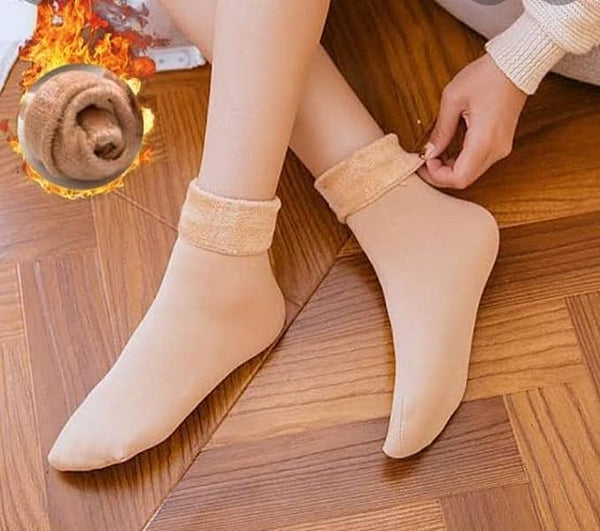
For the leg layer, the fleece-lined winter stockings have soft brushed fleece inside and an outer knit that turns a sheer skin tone once stretched on, so they sit under a salwar, trousers or a skirt without the bulk of a thick thermal. For the feet, fleece-lined thermal skin socks fill the ankle gap and look like bare skin if they show.
How do you layer under kurtis, skirts and trousers?
- Kurti with a salwar. A loose salwar lets wind blow straight through. Fleece-lined stockings underneath keep your legs warm while the outfit looks exactly as it normally does. A churidar or leggings over stockings can feel tight, so choose one leg layer or the other.
- Trousers and jeans. Denim feels cold once the wind gets going. Fleece-lined stockings under straight or wide trousers add warmth without making them look tight.
- Skirts and dresses. Choose knee-length or straight midi hemlines that you can tuck under you when you sit. Wear the "With Socks" fleece-lined stockings with ankle boots, and a coat that covers your knees when seated. Avoid wide, light skirts that lift in the wind.
- A saree as a pillion. Footless fleece-lined stockings under the petticoat, thermal socks with closed shoes, and a shawl wrapped and tucked rather than left loose.
Size the stockings by waist and hips on the stockings size chart; for example, a 40 to 42 inch waist with 46 to 49 inch hips is a 3XL. If you are on the line, choose the larger, since the fleece adds a little thickness and you will be sitting for the whole ride. For more on stockings under ethnic wear, see how to wear stockings with kurtis.
How do you keep a dupatta, saree or scarf secure on a scooter?
Anything loose near the wheels or the chain is a hazard, so this part is about common sense rather than style. Before you start the engine:
- Dupatta: wrap it once round your neck and tuck both ends inside your jacket, or pin it at both shoulders. On cold days, it can simply go in the storage under the seat until you arrive.
- Saree: pin the pleats and the pallu, and tuck the end of the pallu in at the waist. The saree guard on the scooter helps, but don't rely on it.
- Flared kurtis and anarkalis: gather the fabric under you as you sit, so the flare can't drift towards the rear wheel.
- Scarves and mufflers: no trailing ends. Tuck them inside the collar.
- Bags: wear the strap across your body or keep the bag under the seat, never swinging from your arm.
On foggy mornings, a light-coloured or bright outer layer is easier for others on the road to spot than a dark one.
Do you need arm sleeves and sun cover in winter?
On a cold morning, your jacket covers your arms anyway. But winter afternoons in much of India are bright, and an afternoon errand or an early ride home, with the jacket in the storage and a three-quarter-sleeve kurti on, puts your forearms in direct sun. In Pune, Hyderabad or Bengaluru, winter days are mild enough that many riders skip the jacket altogether.
That is where cooling arm sleeves earn a place in the storage under your seat. They cover the skin from wrist to upper arm and reduce sun exposure, fold to almost nothing and come two pairs to a pack. They are a thin sun layer, not a warm one. Use sunscreen on your face, neck and hands. Our guide on preventing arm tan while riding has more.
What should you do when you arrive?
- Plan for helmet hair. A low braid or bun at the nape sits under most helmets more comfortably than a high ponytail. Keep a comb in your bag.
- Cool down indoors. If the office is heated, footless stockings with removable socks let you take a layer off without a full change.
- Dry damp layers. Fog leaves gloves and scarves damp. Hang them up at your desk so they are dry for the ride home.
- Keep indoor shoes at work. Ankle boots are good on the road but warm by noon.
For the rest of a North Indian winter wardrobe, our Delhi winter dressing guide covers office, college and wedding season.
A comfortable winter ride comes from blocking the wind at the knees, hands, neck and ankles, with thin warm layers rather than bulky ones. Secure every loose end before you start, and keep a pair of arm sleeves under the seat for the sunny ride home.
Shop this guide
The pieces mentioned in this guide.
 Sale
 Sale
Frequently asked questions
What should I wear for a winter scooter ride to the office?
A zipped windproof jacket, fleece-lined stockings under your usual kurti, trousers or skirt, thermal socks with closed shoes, thin full-finger gloves and a scarf tucked into your collar.
Are fleece-lined stockings warm enough under a salwar on a scooter?
They add a warm layer you can't see, which makes a real difference under a loose salwar. On the coldest mornings, add a jacket long enough to cover your lap.
Can I wear a woollen cap under my helmet?
Only if the helmet still sits properly and the strap fastens snugly. A thin cotton scarf or knit layer is usually a better fit than a thick cap.
How should I wear a dupatta on a two-wheeler?
Wrap it once round your neck and tuck the ends inside your jacket, or pin it at both shoulders. Never let it hang loose near the wheels.
Do I need sunscreen on a winter ride?
On bright days, yes, for skin that stays uncovered, such as your face and neck. Sleeves and a scarf cover more skin, so less of it depends on sunscreen.